

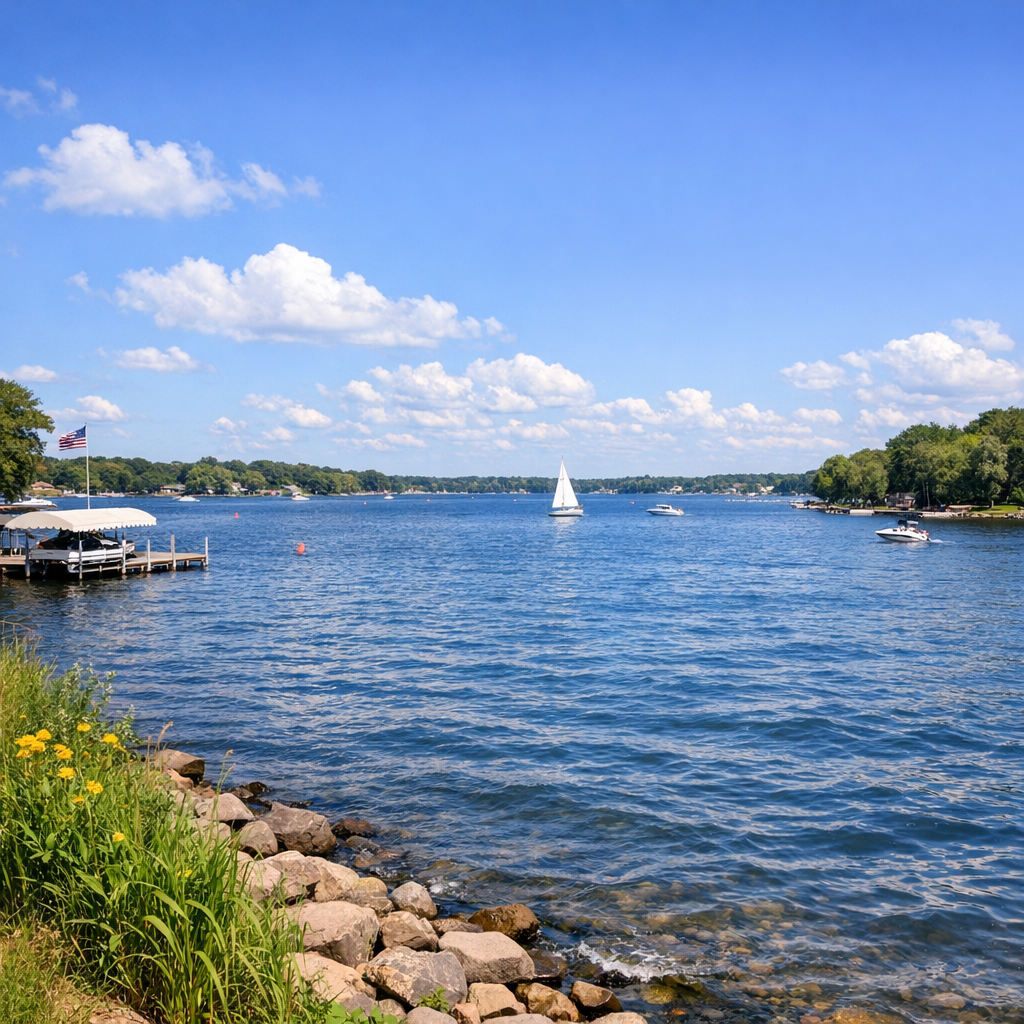
White Bear Lake, Minnesota, experiences a diverse climate characterized by distinct seasonal variations. Winters are typically cold and snowy, with average low temperatures around 6.7°F in January, while summers are warm and wet, with average highs reaching 82.3°F in July. The area receives approximately 33.82 inches of precipitation annually, with June being the wettest month, averaging 4.78 inches of rainfall.
Environmental Concerns
One of the pressing environmental issues in White Bear Lake is the fluctuation of lake water levels. Studies have shown that groundwater use in the area meets Minnesota’s sustainability standards; however, it has contributed to lower water levels in White Bear Lake. Multi-year bans on residential irrigation have been found to have minimal effects on lake levels.
Additionally, the presence of invasive species such as Eurasian watermilfoil and zebra mussels poses challenges to the local ecosystem. These species can disrupt native habitats and affect recreational activities. Residents and visitors are encouraged to remove any visible plants from boats and equipment before leaving the lake to prevent further spread.
Community Initiatives
The City of White Bear Lake has established the Environmental Advisory Commission to advise on policies related to sustainability, climate change, and environmental protection. The commission engages with residents to promote sustainable practices and organizes events to showcase available resources.
Furthermore, the city has implemented stormwater management policies to protect water quality and prevent flooding. Ordinances regulate stormwater runoff and non-stormwater discharges, aligning with state statutes and local watershed regulations.
Understanding the local climate and actively participating in environmental initiatives are crucial steps for residents to ensure the sustainability and health of White Bear Lake’s natural resources.